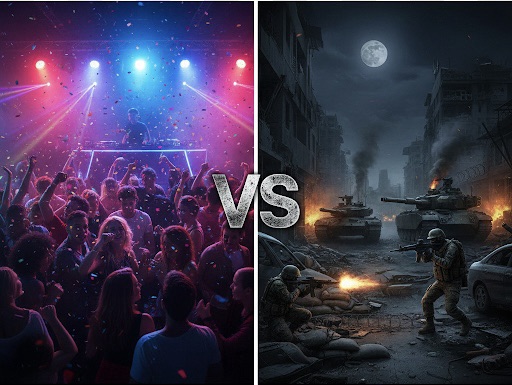
Clubs have always been more than dark rooms with loud music. They are cultural shelters—places where people come to forget, to feel, to connect. But when the world is shaken by war, even the dancefloor begins to change.
While bombs may fall thousands of miles away, their echoes reach clubs across the globe.
The Emotional Shift on the Dancefloor
During times of war, nightlife doesn’t disappear—but its energy transforms.
People still go out, but often with a heavier heart. Dancing becomes less about excess and more about release. Music turns emotional. DJs notice crowds responding more to deep house, melodic techno, ambient breaks, and nostalgic tracks—sounds that allow reflection as much as movement.
In these moments, clubbing becomes a form of collective therapy.
The dancefloor turns into a place where people silently process fear, grief, and uncertainty—together.
Music as Resistance and Unity
Historically, nightlife has always responded to crisis.
From underground clubs during wartime Europe to post-9/11 electronic scenes, music has acted as quiet resistance.
In today’s world, DJs often:
Dedicate sets to peace Host charity nights Use visuals and messages calling for unity Avoid aggressive or overly celebratory tones
Without speeches or slogans, the message is simple: human connection matters more than division.
Economic Impact on Nightlife
Wars don’t just affect emotions—they affect economies.
Rising fuel and energy costs increase club operating expenses Touring DJs face higher travel costs and visa restrictions Festivals get cancelled or downsized Sponsorships and brand funding shrink
In regions closer to conflict, nightlife may shut down entirely—not from lack of passion, but from safety concerns and financial survival.
For many artists and venues, staying open becomes an act of resilience.
Clubbing Near Conflict Zones
In countries directly affected by war, nightlife changes dramatically.
Some clubs close. Others go underground—literally and creatively.
Small, secret events replace large festivals. Music becomes raw, intimate, and deeply meaningful.
For those communities, dancing is no longer escapism—it’s defiance.
A reminder that life, culture, and identity still exist.
The Role of the DJ in Uncertain Times
During global crises, DJs become more than entertainers.
They read the room differently.
They choose tracks with intention.
They balance joy with sensitivity.
A good DJ understands when people need:
Comfort instead of chaos Groove instead of aggression Hope instead of hype
The booth becomes a place of emotional responsibility.
Why People Still Go Out
Some ask: Is it right to party while others suffer?
But history shows us this truth:
Humans don’t dance because the world is perfect. They dance because it isn’t.
Clubbing during wartime isn’t ignorance—it’s survival.
It’s a reminder of what peace feels like, even for a few hours.
The Dancefloor as a Mirror of the World
Wars reshape nightlife not by silencing it, but by giving it deeper meaning.
The lights feel softer.
The music feels heavier.
The connections feel more real.
And in a fractured world, a shared beat becomes one of the last universal languages we have.






 BEST DJ - Music - Games - Movies - Review’s