A message from one DJ to another
We spend our lives surrounded by sound.
Our own music libraries.
New music from other DJs.
Tracks sent by producers.
Music discovered online.
Headphones. Monitors. Club systems. Booth monitors. Subwoofers.
And then there are the transitions — sometimes we are standing beside a sound system for hours while the music is being pushed at levels that our ears were never designed to experience continuously.
For many DJs, loud music is part of the job.
But loud doesn’t always mean better.
I learned that myself.
After some nights DJing, I would eventually get home, lie down somewhere quiet, and suddenly notice this strange buzzing sound in my ears.
The music had stopped.
But my ears hadn’t.
At the time, it was easy to think:
“It’ll be gone by tomorrow.”
And sometimes it was.
But that buzzing is something DJs shouldn’t simply ignore.
Tinnitus can sound like ringing, buzzing, humming, hissing or other noises that aren’t coming from an external source. Regular exposure to loud music is one possible cause, and repeated exposure can contribute to hearing damage. (nhs.uk)
You don’t have to DJ at full blast
This is probably the biggest message I want to give DJs:
You don’t need to destroy your ears to make people dance.
A great DJ isn’t great because the booth is painfully loud.
They’re great because they understand music.
The selection.
The timing.
The energy.
The atmosphere.
The transitions.
The crowd.
Try getting into the habit of asking yourself:
“Does it really need to be louder?”
Give your ears a break when you can.
Move away from the speakers when you’re not actively working.
Take short periods somewhere quieter.
And consider specialist musicians’ earplugs that reduce sound levels while allowing you to hear music more naturally. NHS audiology guidance specifically recommends hearing protection and notes that musicians can use specialist earplugs. (Royal Free London)
Your headphones count too
It’s not only the club.
DJs can spend hours preparing music:
“Just one more track.”
Then another.
And another.
Before you know it, you’ve spent several hours listening through headphones.
Give your ears breaks.
You don’t need to listen at maximum volume to analyse a track.
In fact, learning to work at sensible monitoring levels can be a useful discipline.
Protect your ears today because you’re going to want them tomorrow.
The DJ lifestyle can affect your head as well as your ears
There is another side of this that doesn’t get discussed enough.
DJs can have unusual lifestyles.
Late nights.
Irregular sleep.
Travelling.
Long periods surrounded by people followed by suddenly being alone.
Pressure to perform.
Pressure to keep finding new music.
Pressure to stay relevant.
Social media.
Competition.
Alcohol.
Drugs.
And sometimes the feeling that you always have to be “on.”
Music can be incredibly positive for our mental health, creativity and sense of identity. But the lifestyle surrounding nightlife can also put pressure on us.
So don’t confuse looking after yourself with becoming less of a DJ.
Looking after yourself is part of staying a DJ for longer.
And then there’s alcohol…
Let’s be honest.
Alcohol has been part of nightlife culture for decades.
But if you’re working, the safest option is not to drink.
If you do choose to drink, remember that alcohol affects judgement, coordination, sleep and your ability to make good decisions.
And don’t use alcohol as a way of trying to knock yourself out after a gig.
It may make you sleepy initially, but alcohol can disrupt normal sleep patterns. (Wirral University Hospital)
Most importantly:
Don’t mix alcohol with recreational drugs.
There isn’t a simple “safe combination” rule, and different substances can interact unpredictably.
If you’ve taken something and feel unwell, don’t try to hide it because you’re worried about what people will think.
Tell someone. Get help.
Your health is more important than your reputation, your gig or your pride.
What about after the gig?
Instead of immediately reaching for another drink, think about what your body has actually been through.
You’ve probably been awake for hours.
You’ve been standing.
You’ve been concentrating.
You’ve been exposed to loud sound.
You’ve probably had caffeine.
Maybe alcohol.
Maybe very little food.
Your body needs recovery.
Drink water.
Eat something sensible.
Get somewhere calm.
Give yourself time to come down from the intensity of the night.
And get some proper sleep.
Don’t be afraid of quiet
This is something I personally wish I’d understood earlier.
After spending hours surrounded by music, quiet can feel strange.
You get home.
Everything stops.
And suddenly you hear that buzzing.
If you’ve experienced this, you’re not necessarily imagining it. Temporary ringing or buzzing after loud sound exposure can happen, but persistent or worsening tinnitus should be discussed with a healthcare professional. (nhs.uk)
And if you experience sudden hearing loss, particularly alongside tinnitus, seek urgent medical help. (nhs.uk)
Don’t wait until you’re struggling to hear conversations.
Don’t wait until you have to turn the television up.
Don’t wait until someone says:
“Why are you always saying ‘what’?”
Look after your hearing before there is a serious problem.
Your ears are your equipment
A DJ will spend hundreds or thousands of pounds on:
Controllers.
Turntables.
Mixers.
Headphones.
Speakers.
Computers.
Music.
But your most important piece of equipment is something you can’t replace with a new model:
YOUR EARS.
And alongside your ears, you’ve got something else worth protecting:
YOUR MIND.
Take breaks.
Sleep.
Eat.
Hydrate.
Talk to people.
Don’t let nightlife become your entire life.
And if you’re struggling mentally, don’t suffer in silence simply because you’re supposed to be the person making everyone else feel good.
Talk to somebody.
A DJ’s simple health checklist
Before your next gig, remember:
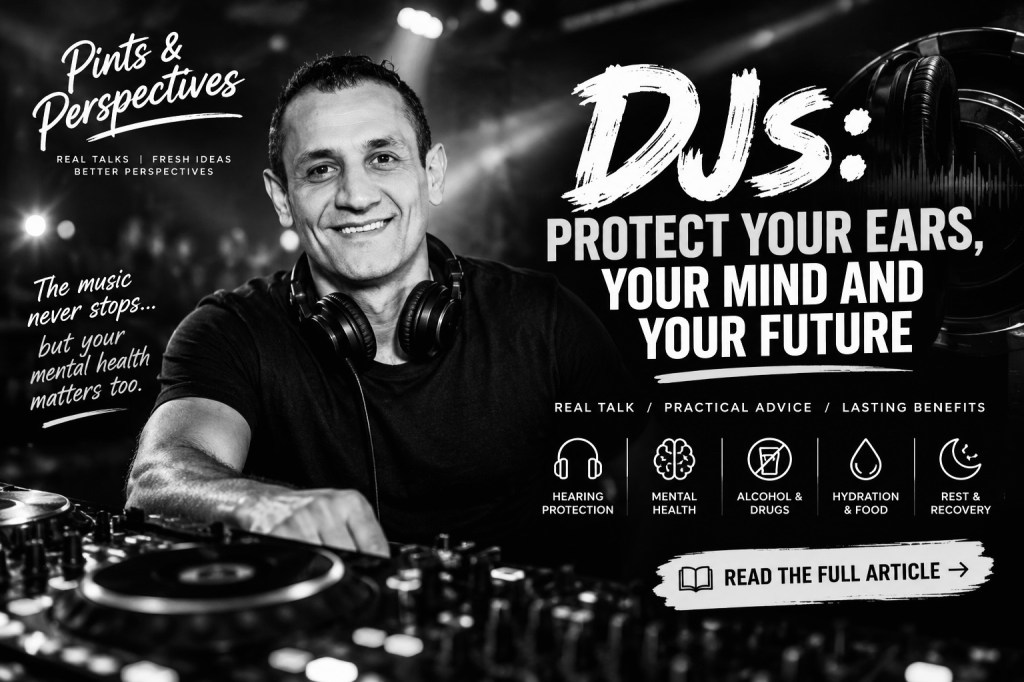
Volume — It doesn’t always need to be full blast.
Hearing protection — Consider proper musicians’ earplugs.
Breaks — Give your ears periods away from loud sound.
Monitoring — Keep headphone levels sensible.
Hydration — Don’t rely on alcohol or caffeine all night.
Food — Don’t forget to eat.
Sleep — Your body needs recovery.
Alcohol — The safest option while working is not to drink.
Drugs — Don’t mix recreational drugs with alcohol or other substances.
Mental health — Talk to somebody if you’re struggling.
Tinnitus — Don’t automatically dismiss persistent ringing or buzzing.
Hearing checks — If you’re regularly exposed to loud music, consider getting your hearing checked.
One final thought from one DJ to another
We spend our lives creating memories for other people.
We make people dance.
We soundtrack birthdays, weddings, clubs, festivals and nights people remember for years.
That’s an amazing thing to be able to do.
But somewhere along the way, we have to remember that we are part of the equation too.
The music will still be there tomorrow.
The next track will still be waiting.
The next gig will come.
So turn it down when you can.
Take the earplugs.
Take the break.
Drink some water.
Get some sleep.
Look after your head.
Look after your ears.
Because the goal shouldn’t be to be the loudest DJ in the room.
The goal should be to still be enjoying music when you’re old enough to tell the younger DJs how you survived the journey.
Protect your hearing. Protect your mind. Protect your passion.
From one DJ to another — look after yourself
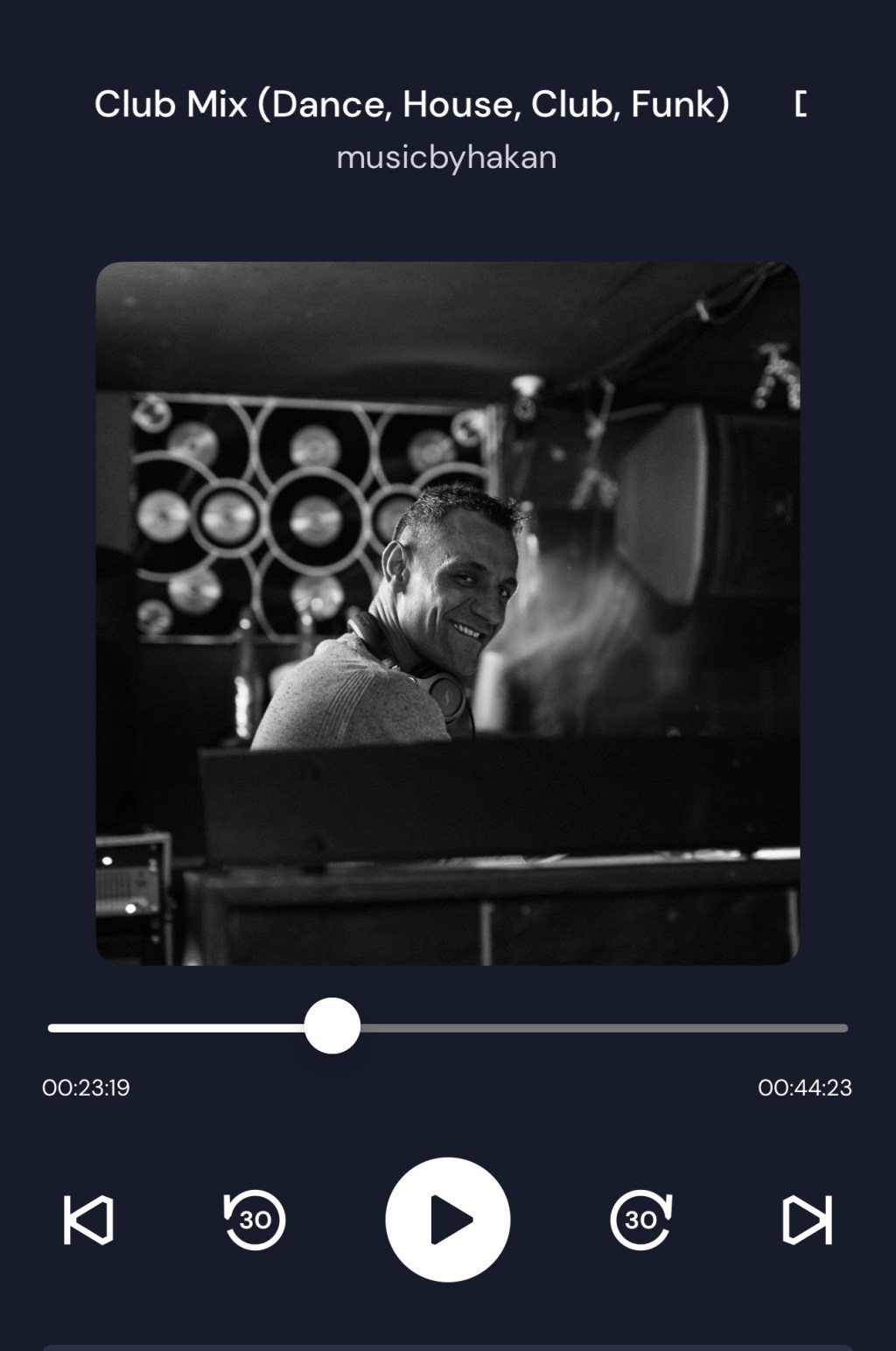
Best DJ. Hakan N



 BEST DJ - Music - Games - Movies - Review’s